Bob Clearmountain: Mix Engineer Behind Springsteen, Rolling Stones & Bon Jovi's Biggest Hits
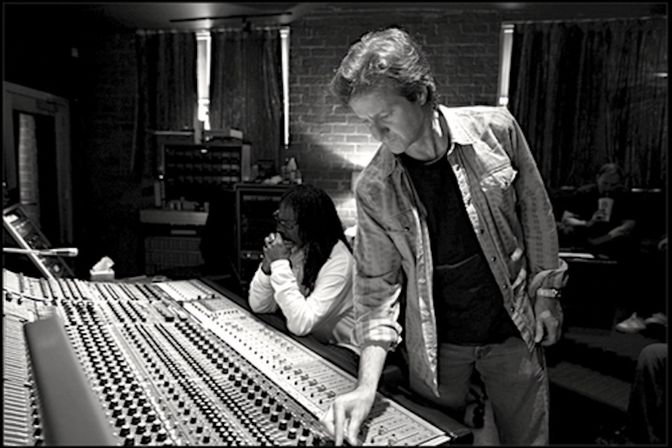
Bob Clearmountain has mixed some of the most successful albums in rock and pop history. Over four decades, he’s worked with Bruce Springsteen, The Rolling Stones, Bon Jovi, and dozens of other major artists. His mixes have a clarity and punch that became the gold standard for commercial rock in the 1980s and beyond.
Discography highlights
Clearmountain’s credits span rock, pop, jazz, and R&B:
- Bruce Springsteen - “Born in the U.S.A.”
- The Rolling Stones - “Tattoo You”
- Bon Jovi - “Slippery When Wet”
- Chic - “C’est Chic”
- Bryan Adams - “Reckless”
- Paul McCartney - “Chaos and Creation in the Backyard”
- Hall & Oates - “Private Eyes”
Mixing philosophy
Clearmountain sees mixing as both technical craft and artistic interpretation. He focuses on serving the song rather than imposing a signature sound, though his mixes tend to have a characteristic clarity and space.
“Mixing is a combination of art and science,” he said in a 2010 interview. “You have to understand the technical side, but you also have to have a feel for the music and the emotions it conveys.”
He approaches each project differently, listening for what the recording needs rather than following a template. The goal is to make every element audible and impactful without creating clutter.
Studio gear
Clearmountain’s studio setup includes:
- SSL 9000 J Series Console
- Avid Pro Tools HDX System
- Burl Audio B2 Bomber ADC/DAC
- Genelec 1032A Monitors
- Tube-Tech CL 1B Compressor
- Neve 1073 Preamps
- Empirical Labs Distressors
The SSL console gives him the surgical EQ control he’s known for, while the Neve preamps add warmth to tracking. The Empirical Labs Distressors are workhorses on drums and bass.
Plugins
Despite his analog background, Clearmountain uses plugins extensively. His most-used digital tools include:
- UAD Plugins (particularly the 1176 and LA-2A emulations)
- Waves Renaissance Compressor
- Sonnox Oxford Inflator
- Avid Channel Strip
- Soundtoys Decapitator
The UAD 1176 emulation gets heavy use on vocals and guitars. He’s mentioned that the Renaissance Compressor is his go-to for gentle bus compression that doesn’t call attention to itself.
Signature techniques
The “summing trick”
Clearmountain developed a technique where he prints individual tracks to a stereo mix, then brings that stereo mix back into the session as a new element. This adds depth and cohesion—the resampled stereo track acts as “glue” that ties disparate elements together.
Parallel compression
He blends a heavily compressed version of a track with the original uncompressed version. This adds punch and sustain while keeping the natural dynamics intact. He’s particularly known for using this on drum busses.
Drum sample reinforcement
Clearmountain often reinforces live drum tracks with carefully selected samples. This technique, which he pioneered in the 1980s, adds weight and clarity to drums without sacrificing the feel of the live performance. The samples fill in frequencies that microphones miss or that get lost in the mix.
Surgical EQ and detailed automation
His EQ work is precise. He’ll carve out narrow frequency ranges to make space for competing elements, then use automation to adjust those EQ moves throughout the song as arrangement changes. This level of detail—writing automation for EQ parameters, not just volume—was uncommon before Clearmountain popularized it.
Awards
- 2 Grammy Awards
- 6 TEC Awards (Technical Excellence & Creativity)
- TEC Awards Hall of Fame inductee (2017)
- Les Paul Award from the Les Paul Foundation (2019)
Lasting influence
Clearmountain’s mixes from the 1980s and 1990s defined what commercial rock was supposed to sound like. His techniques—parallel compression, drum sample reinforcement, detailed automation—are now standard practice. Engineers still reference his work on “Born in the U.S.A.” and “Slippery When Wet” when they want that punchy, clear, radio-ready sound.
His approach combines technical precision with musical sensibility. That balance is what keeps his mixes sounding fresh decades later.
For the contrast — what aggressive, high-compression mixing sounds like in practice — Chris Lord-Alge is the reference point. Seven Grammys, same era, completely different philosophy. Studying both tells you more about mix philosophy than either does alone.
Spike Stent is the other useful comparison — an engineer who deliberately avoids Clearmountain’s kind of defined sound. Stent’s identity is adaptability: the same engineer made Björk, Radiohead, and Madonna records that don’t sound anything like each other. Where Clearmountain brings a consistent clarity and punch regardless of the artist, Stent bends completely to whoever he’s working with.
Michael Brauer represents the same commercial rock tradition from a different angle. Where Clearmountain’s signature is precision and clarity, Brauer’s is dynamics — keeping real dynamic range alive in an era when most engineers were compressing everything flat. Coldplay’s A Rush of Blood to the Head, John Mayer’s Continuum: loud without being crushed. Worth studying alongside Clearmountain’s work to understand what “loudness” actually means.
Al Schmitt is the most decorated engineer in Grammy history — 23 wins across seven decades. Where Clearmountain’s approach is precision and clarity, Schmitt’s is restraint and natural sound: hours of mic placement work so he never needed to do much in the mix. The contrast defines the poles of high-end recording philosophy.