Chris Lord-Alge: 7-Time Grammy Winner Behind Green Day, Foo Fighters & Bruce Springsteen
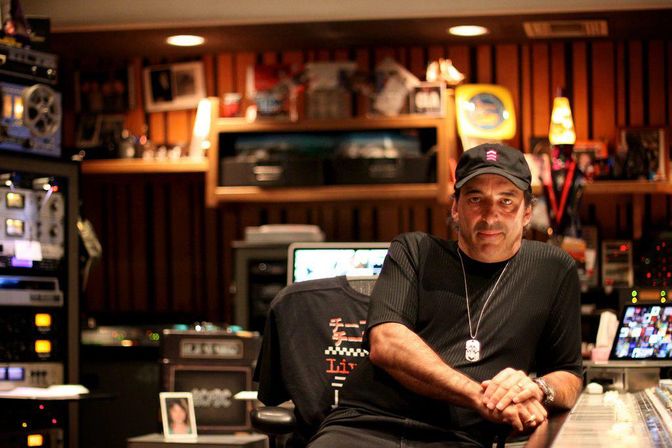
Chris Lord-Alge (CLA) has spent four decades making rock records louder, punchier, and more aggressive than anyone thought possible. His mixes for Green Day, Foo Fighters, My Chemical Romance, and Bruce Springsteen have a distinctive quality—they sound massive on radio, crystal clear in headphones, and completely visceral at high volume.
He’s won seven Grammy Awards, but what really matters is the sound. CLA mixes have energy. They hit hard. They don’t sound polite or subtle or tasteful in a traditional audiophile sense. They sound like they’re trying to jump out of the speakers and grab you.
“If it sounds good, it is good,” he says, summing up his entire philosophy. He trusts his ears, works fast, and isn’t afraid to push things until they distort if that’s what the song needs.
Career path
CLA started at Unique Recording Studios in New York in the early 1980s. His breakthrough was mixing James Brown’s “Gravity” album in 1986, which established his reputation for creating punchy, radio-ready mixes.
By the 2000s, he’d become the go-to mixer for pop-punk and alternative rock, working on albums that defined that era’s sound.
Selected discography
- Green Day - “American Idiot” (2004)
- My Chemical Romance - “The Black Parade” (2006)
- Paramore - “Riot!” (2007)
- Muse - “Black Holes and Revelations” (2006)
- Avril Lavigne - “Let Go” (2002)
- Foo Fighters - “Wasting Light” (2011)
- Bruce Springsteen - “Working on a Dream” (2009)
Core equipment
CLA runs a hybrid setup, combining analog gear with Pro Tools:
Console: SSL 4000 G+ Series—the backbone of his mixing rig
Monitors: Yamaha NS-10s (for their brutally honest midrange) and Augspurger main speakers
Outboard gear:
- Universal Audio 1176 compressors (his go-to for vocals and drums)
- dbx 160 compressors (especially for parallel compression)
- Tube-Tech CL 1B compressor (smooth compression on bass and vocals)
- Eventide H3000 harmonizer
- Lexicon 480L reverb
Plugins: He created the Waves CLA Signature Series, a collection modeled after his analog gear. He also uses Waves SSL G-Channel, H-Delay, L2 Ultramaximizer, and UAD’s 1176 plugin.
Mixing philosophy
CLA works fast—he often completes a mix in a single day. Speed keeps the mix instinctual rather than overthought. “The best mixes happen when you’re not overthinking it,” he says.
His approach:
Excitement over perfection: “I’m not here to make it perfect. I’m here to make it exciting.” He’ll compress hard, EQ aggressively, or add distortion if that’s what the song needs.
Trust your ears, not meters: “I don’t care what the meters say. I care what my ears say.” He prioritizes listening over visual feedback from the DAW.
Vocals are king: “The vocal is king. Everything else is there to support it.” In most of his mixes, the vocal is loud and upfront, with everything else arranged around it.
Start with good material: “A great mix starts with a great arrangement. You can’t polish a turd.” He’s blunt about this—no amount of mixing can fix a bad performance or weak songwriting.
Signature techniques
The CLA vocal stack
He uses multiple compressors in series on vocals:
- Fast-attack FET compressor (like a 1176) for initial control
- Slower optical compressor (like an LA-2A) for overall leveling
- Third compressor for color and character
This creates vocals that stay consistent and upfront without sounding over-compressed.
Parallel compression on drums
He sends the drum bus to an aux track, applies heavy compression (often using a dbx 160), then blends the crushed signal back with the original. This adds punch and sustain while keeping the natural dynamics.
The “rear bus” technique
For depth and excitement:
- Send various elements to a stereo aux
- Apply heavy compression and EQ
- Add delay and/or reverb
- Blend back into the mix for dimension
This creates a sense of space and energy without washing out the mix.
Vocal delay throws
At the end of vocal phrases, he automates a send to a delay aux, usually with a tempo-synced dotted eighth note delay. The delay return is high-pass filtered for clarity. This adds interest without cluttering the vocal.
Master bus processing
He applies gentle multi-band compression to the master bus, focusing on controlling low-mids and adding excitement to highs. This helps glue the mix together and adds the loudness and punch he’s known for.
His approach in his own words
“The mix should enhance the song, not bury it.”
“Speed is my friend. The quicker I work, the more instinctual the mix becomes.”
“I’m not afraid to compress. I’m not afraid to EQ. I’m not afraid to distort. Whatever it takes to get that excitement.”
“Compression is the sound of rock and roll.”
“Trust your ears, not your eyes. The computer screen lies.”
Awards
Grammy Awards:
- Best Engineered Album, Non-Classical (1982) - Steve Winwood’s “Arc of a Diver”
- Record of the Year (2006) - Green Day’s “Boulevard of Broken Dreams”
- Best Rock Album (2006) - Green Day’s “American Idiot”
- Album of the Year (2007) - Dixie Chicks’ “Taking the Long Way”
- Best Rock Album (2008) - Foo Fighters’ “Echoes, Silence, Patience & Grace”
- Best Rock Album (2010) - Green Day’s “21st Century Breakdown”
- Best Rock Album (2012) - Foo Fighters’ “Wasting Light”
Other recognition:
- Five TEC Awards for Outstanding Creative Achievement
- Mix Magazine’s “Mix Master” award (2006)
- Music Producers Guild’s International Producer of the Year (2009)
- Multiple Platinum and Gold certifications
What makes his sound distinctive
CLA’s mixes are immediately recognizable. They’re louder than most mixers would dare, with compression that would make purists wince. But they work. They sound exciting on car stereos, earbuds, and club systems.
He’s not chasing transparency or audiophile naturalness. He’s chasing impact. That means heavy compression, aggressive EQ, and a willingness to distort things if it serves the song. The vocals are loud. The drums hit hard. The guitars are wide and aggressive.
This approach defined the sound of 2000s rock and pop-punk. Green Day’s “American Idiot” is the blueprint—everything is pushed to maximum energy without falling apart. That’s the CLA sound.
Related: mix engineers worth comparing
- Bob Clearmountain — The useful contrast. Clearmountain built his reputation on clean, transparent mixes that feel powerful without the aggressive compression. Studying both shows you two completely different paths to “punchy.”
- Jacquire King — Works in similar rock and pop territory but with a softer touch. His Adele and Kings of Leon records sit on the opposite side of the loudness dial from CLA’s work.
- Spike Stent — A British engineer who mixes across genres with a more adaptive approach. His Björk, Radiohead, and Madonna work required something CLA’s template doesn’t offer: restraint.