Tchad Blake: The Mix Engineer Behind Radiohead, Wilco & The Black Keys Sonic Adventures
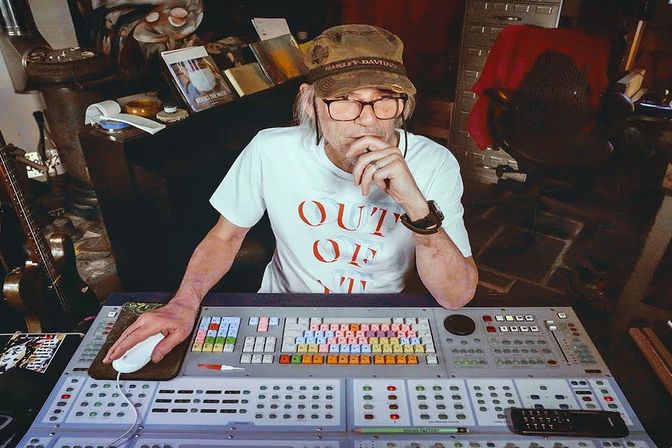
Tchad Blake mixes records that sound different. Not polished-different. Weird-different. He’s worked on some of the most sonically adventurous albums of the past three decades—Wilco’s “Yankee Hotel Foxtrot,” Radiohead’s “A Moon Shaped Pool,” The Black Keys’ “El Camino,” Arcade Fire’s “The Suburbs.” These records don’t sound like anything else, and that’s the point.
The Man Behind the Console
Blake has been mixing records since the 1980s, working with artists who want their music to sound distinctive rather than radio-ready. He experiments constantly, pushes gear past its limits, and breaks conventional mixing rules on purpose. The result? Mixes that feel alive and unpredictable.
Mixing Equipment
Blake runs a hybrid setup—vintage analog gear paired with modern digital tools. It’s not about nostalgia. The old gear does things plugins still can’t quite replicate.
Neve 8078 Console - Blake’s main mixing desk. Known for warmth and headroom.
Studer A800 Tape Machine - Adds analog saturation and compression. Blake runs mixes through it to add character.
Lexicon 480L - Classic digital reverb from the 1980s. Still sounds better than most modern units.
Eventide H3000 Ultra-Harmonizer - Does everything from subtle pitch correction to completely mangled experimental sounds.
Universal Audio Apollo Interface - Bridges the gap between analog hardware and digital plugins with high-quality conversion.
Notable Albums
A partial list — these are the ones that show the range of what he can do:
Wilco - “Yankee Hotel Foxtrot” (2002) - One of the defining alt-rock albums of the 2000s. The mix is full of weird textures and unexpected sounds.
Coldplay - “Viva la Vida or Death and All His Friends” (2008) - Coldplay’s most experimental album. Blake’s mix gave it depth and strangeness.
Arcade Fire - “The Suburbs” (2010) - Won Album of the Year at the Grammys. The mix balances orchestral sweep with indie rock rawness.
The Black Keys - “El Camino” (2011) - Won Best Rock Album. Blake made a blues-rock duo sound massive.
Arcade Fire - “Reflektor” (2013) - Dense, layered production with dance influences.
The Black Keys - “Turn Blue” (2014) - Psychedelic blues-rock with serious low-end depth.
Radiohead - “A Moon Shaped Pool” (2016) - Orchestral arrangements mixed with electronic textures. Blake kept it cohesive without flattening the dynamics.
Nick Cave and the Bad Seeds - “Ghosteen” (2019) - Sparse, haunting production. Blake’s mix gives each element space to breathe.
Mixing Philosophy
Blake’s approach is simple: emotion matters more than perfection. If a take has energy and feeling, he keeps the imperfections that give it character. Most engineers try to clean everything up. Blake does the opposite—he accentuates the rough edges.
Depth and dimension - Blake creates space in his mixes through creative panning and effects. His mixes feel three-dimensional rather than flat.
Distortion as a tool - Where most engineers see clipping as a problem to fix, Blake sees it as an option to consider. The specific techniques are in the Mixing Techniques section below.
Breaking the rules - Conventional mixing wisdom says certain things shouldn’t be done. Blake ignores those rules and does what serves the song.
Constant experimentation - Blake tries unconventional techniques constantly. Some fail. The ones that work become part of his signature sound.
Mix Bus Approach
Blake’s mix bus chain is short by design. His view is that bus processing should do almost nothing — if you need heavy glue or limiting at the master bus, the individual tracks aren’t sitting right yet. He solves those problems upstream.
When he does add something to the mix bus, the Chandler Limited TG1 Limiter (see Outboard Gear below) is a go-to. He uses it for its character rather than its control. The TG1 is modeled on the classic EMI/Abbey Road bus limiter — it adds harmonic rounding and a subtle softening of transients without the obvious squash you get from more aggressive bus compressors. Used at low ratios and slow attack times, it brings a mix together without you hearing it working.
Blake doesn’t chase loudness at the bus stage. His recordings are dynamic — louder where the energy is, quieter where it isn’t. Heavy limiting on the bus tends to flatten that natural shape, and flat is the last thing he wants a mix to sound like.
There’s no fixed bus chain that he drops on every session. A dense rock mix might get slightly more bus compression than a sparse folk record. He adjusts based on what the music needs, not what a template tells him.
The practical lesson: if you’re trying to get anywhere near his sound, build the character at the channel level. Saturation, distortion, and grit happen on individual tracks and groups. The mix bus adds cohesion — it doesn’t add personality.
Plugins
Blake uses plugins alongside his analog gear, not instead of it.
UAD Studer A800 - Tape saturation plugin. Adds warmth and compression without running actual tape.
UAD Neve 1073 - Digital version of the classic Neve preamp and EQ.
Soundtoys EchoBoy - Versatile delay plugin with character. Blake uses it for creative echo effects.
FabFilter Pro-Q 3 - Surgical EQ for precise frequency work.
Valhalla VintageVerb - Reverb plugin that actually sounds vintage rather than digital.
Outboard Gear
Empirical Labs Distressor - Versatile compressor that can add character or just control dynamics. Blake uses it constantly.
Bricasti M7 Reverb - High-end reverb unit with natural-sounding spaces.
Tube-Tech CL 1B - Optical compressor. Smooth and musical, especially good on vocals and bass.
Chandler Limited TG1 Limiter - Based on the classic Abbey Road limiter. Blake uses it for its distinctive sound on drums and mix buses.
API 550A EQ - Musical EQ that shapes sound without adding harshness.
Mixing Techniques
Blake’s techniques are what set his mixes apart from everyone else’s.
Extreme Panning - Blake pans elements hard left or right instead of keeping everything centered. It creates a wide, immersive soundstage and helps instruments stay separated.
Parallel Processing - Blake blends a heavily processed version of a track with the original. This adds character and aggression without losing clarity. He uses it heavily with compression and distortion.
Creative Distortion - Most engineers avoid distortion. Blake pushes preamps and compressors until they break up. It adds grit and excitement that clean processing can’t achieve.
Unconventional Mic Placement - Blake experiments with unusual microphone positions during tracking. Unexpected placements can capture unique sounds that conventional techniques miss.
Layered Effects - Blake chains effects in creative ways—feeding reverb into delay, stacking multiple instances of the same effect with different settings. The results are dense, shifting textures that move through a song rather than sitting still.
Aggressive Compression - Blake uses heavy compression as an effect, not just to control dynamics. He pushes compressors hard to create pumping or to completely reshape a sound’s envelope.
Embracing Imperfections - Amp noise, vocal breaths, string squeaks—Blake often leaves these in or even accentuates them. They add character that sterile perfection can’t provide.
Creative Automation - Blake automates everything—volume, effects parameters, panning. The result is a mix that moves with the song instead of sitting on one level for four minutes.
Analog and Digital Together - Blake doesn’t pick sides. He uses analog warmth where it helps and digital precision where it makes sense.
Low-End Focus - Blake’s bass is powerful and well-defined without muddying the mix. It provides a solid foundation without overwhelming everything else.
Awards
Grammy Wins
Best Engineered Album, Non-Classical (1997) - Suzanne Vega’s “Nine Objects Of Desire”
Best Engineered Album, Non-Classical (1999) - Sheryl Crow’s “The Globe Sessions”
Best Rock Album (2013) - The Black Keys’ “El Camino”
Notable Nominations
Blake has been nominated for multiple additional Grammys, including Best Engineered Album for Bonnie Raitt’s “Fundamental” and Best Alternative Music Album for Gomez’s “How We Operate.”
Music Producers Guild Awards
International Producer of the Year (2015)
Mix Engineer of the Year (2019)
TEC Awards
Nominated for Outstanding Creative Achievement for The Black Keys’ “Turn Blue” (2015)
On Music and Mixing
Blake has been direct about what he values in a mix — from interviews and his Mix With the Masters sessions:
“Sometimes the mistakes, the accidents, the things that aren’t quite perfect — those are the elements that give a recording its character and make it interesting.”
“Don’t be afraid to try things that seem crazy. Some of the best sounds I’ve gotten have come from doing things you’re not supposed to do.”
“Know the rules so you can break them effectively. It’s not about ignoring technique — it’s about using it in service of the music.”
“The most important skill for any engineer is the ability to really listen. Not just to the technicalities, but to the emotion and energy of the music.”
Related: other mix engineers worth studying
If Blake’s approach interests you, these engineers share similar instincts — prioritizing feel over technical precision and using analog gear as a creative tool rather than just a clean signal path.
- Spike Stent — British mix engineer behind Radiohead, Björk, and Massive Attack. Like Blake, he adapts his process completely to the artist rather than working from a template.
- Bob Clearmountain — Known for clean, powerful mixes that still feel organic. A useful contrast to Blake’s dirtier approach.
- Andrew Scheps — Works entirely in the box, which makes his sonic results all the more interesting to compare with Blake’s analog-heavy signal chain.
- Al Schmitt — The contrast to Blake is instructive. Schmitt achieved a completely different kind of character through restraint and natural mic placement rather than saturation and creative distortion.
- Michael Brauer — Another engineer who leads with emotion over technique. Where Blake uses saturation and deliberate lo-fi texture to create character, Brauer builds it through dynamics and layering. Same priority, different tools.
- Jack White — Artist-producer who reaches for the same vintage Neve consoles and Studer tape machines, but uses them as hard rules rather than preferences. Blake adapts his approach to whoever he’s working with; White’s limitation is the approach.
- Radiohead — Blake mixed A Moon Shaped Pool, integrating orchestral and electronic elements without losing the album’s dynamic range — a textbook case of his approach in practice.
Conclusion
Blake has influenced a generation of mixers by showing that breaking the rules can lead to more interesting results than following them. His mixes prioritize emotion over technical perfection, and they sound distinctive because of it.
If you’re learning to mix, Blake’s work is worth studying—not to copy his exact techniques, but to understand his priorities. Emotion matters more than perfection. Experimentation beats playing it safe. The weird choice is often the right choice if it serves the song.
Listen to “Yankee Hotel Foxtrot” or “A Moon Shaped Pool” and pay attention to the choices that shouldn’t work but do. That’s the Blake approach: break the rules on purpose, then own the results.
If you’re at the stage of sharing rough mixes for feedback, the same principle applies — knowing how to give and receive specific, useful feedback makes the iteration process faster. The guide to giving feedback on music is worth reading alongside studying engineers like Blake.