Andrew Scheps: 6-Time Grammy Winner Who Mixed Adele 21, RHCP & Metallica In-The-Box
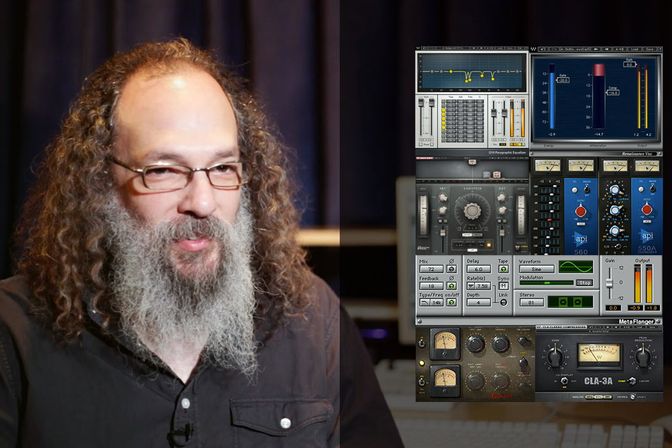
Andrew Scheps won six Grammy Awards for his mixing work on albums ranging from Adele’s “21” to Red Hot Chili Peppers’ “Stadium Arcadium.” He’s mixed for Metallica, Jay-Z, U2, and dozens of other major artists across rock, pop, and hip-hop.
What makes Scheps interesting is his willingness to experiment. He’s got a room full of vintage analog gear but he’s also one of the first high-profile mixers to go fully in-the-box, doing entire mixes with just plugins. He’ll use parallel compression aggressively, saturate things until they distort, and generally break rules if it serves the song.
Selected work
- Adele - “21” and “25”
- Red Hot Chili Peppers - “Californication” and “By the Way”
- Metallica - “Death Magnetic”
- Jay-Z - “The Blueprint 3”
- U2 - “No Line on the Horizon”
- Weezer - “Everything Will Be Alright in the End”
- Green Day - “Revolution Radio”
Awards
6 Grammy Awards:
- Best Engineered Album, Non-Classical for “21” by Adele (2012)
- Best Rock Song for “Brendan’s Death Song” by Red Hot Chili Peppers (2007)
- Best Rock Album for “Stadium Arcadium” by Red Hot Chili Peppers (2007)
- Best Rock Album for “Californication” by Red Hot Chili Peppers (2000)
- Best Rock Album for “Tiny Music… Songs from the Vatican Gift Shop” by Stone Temple Pilots (1997)
- Best Rock Album for “Purple” by Stone Temple Pilots (1995)
2 Latin Grammy Awards:
- Record of the Year and Song of the Year for “Despacito” by Luis Fonsi & Daddy Yankee (2018)
Other recognition:
- BRIT Award - British Album of the Year for “21” by Adele (2012)
- 2 TEC Awards for Outstanding Creative Achievement
Mixing setup
Scheps has run different setups over the years. At one point, he had a full analog mixing room centered around an Avid S6 control surface with Pro Tools HDX, using a Neve 8816 summing mixer and serious outboard gear:
- Tube-Tech CL 1B compressor
- API 2500 compressor
- Empirical Labs Distressor (one of his favorites for drums and vocals)
- Manley Vari-Mu compressor
- Fairchild 670 compressor
- Universal Audio 1176 compressor
- Pultec EQP-1A EQ
- API 560 EQ
- Neve 33609 compressor/limiter
- Thermionic Culture Phoenix mastering EQ
But in 2011, he went fully in-the-box as an experiment and never looked back. He now mixes entirely with plugins, which was controversial at the time for someone at his level. The move was partly practical (he travels a lot) and partly philosophical—he wanted to prove you could get world-class mixes without expensive hardware.
Core plugins
When Scheps went in-the-box, he built a plugin collection that replicated his analog workflow:
UAD plugins: The 1176, LA-2A, and Pultec emulations get heavy use. He’s mentioned that the UAD 1176 plugin is so good that he sometimes prefers it to the hardware for its flexibility and recall.
Waves SSL and API emulations: The Waves SSL E-Channel plugin is his channel strip workhorse. He uses it for EQ, compression, and gate processing across most tracks.
Soundtoys Decapitator: He uses this saturation plugin constantly—on drums, guitars, synths, even vocals when he wants grit. It can do subtle analog warmth or full-on distortion.
Soundtoys EchoBoy: His go-to delay plugin for everything from subtle slap delays to creative effects.
FabFilter Pro-Q 3: When he needs surgical EQ work, this is his choice for its transparency and flexibility.
iZotope Ozone: For mastering-style processing when needed.
The key is that he doesn’t just slap these plugins on randomly—he’s using them to recreate the workflows he developed with hardware, just with better recall and portability.
Mixing philosophy
Scheps thinks about mixing as serving the performance, not the technology. His instinct is to work with what the track already has rather than impose processing on it.
His approach:
Minimal processing, maximum impact: He believes in letting the natural sound of instruments shine through. Every processing decision needs a reason — if it doesn’t improve the mix, it doesn’t stay.
Trust your ears, not your gear: “The most important piece of gear in any studio is the set of ears attached to the engineer’s head.” He’ll use whatever tool gets the job done, whether it’s a $10,000 compressor or a free plugin.
Serve the song and the artist’s vision: Every mix decision should support what the song is trying to communicate. “Music is a language, and the mixing engineer’s job is to help the artist communicate their message as clearly and powerfully as possible.”
Signature techniques
Parallel compression
Scheps popularized heavy use of parallel compression, where you duplicate a signal, compress it aggressively, then blend it back with the original. This adds punch and sustain without destroying the natural dynamics.
He’ll use this on drums constantly—the parallel compression adds weight and aggression while the uncompressed signal maintains the transients and feel.
Drum mixing: foundation first
He starts drum mixes by getting the kick and snare rock-solid first. Once he has that foundation dialed in with compression, EQ, and saturation, he builds everything else around it. The overheads and room mics fill in the space, but the kick and snare are the anchors.
Vocal parallel processing
For vocals, he creates a separate, heavily processed chain (compression, saturation, maybe distortion) and blends it under the main vocal. This adds warmth and presence without over-processing the primary vocal track.
Analog summing (when he used it)
Before going fully in-the-box, Scheps was a strong advocate for analog summing—running individual tracks through an analog mixer (his Neve 8816) before converting back to digital. He felt this added warmth and glue to the mix.
When he went in-the-box, he initially worried about losing that quality, but he’s said that modern plugins can get close enough that most listeners won’t notice the difference.
Creative saturation and distortion
Scheps isn’t afraid to push things into distortion. He’ll use the Soundtoys Decapitator to add grit to drums, guitars, synths, whatever needs energy and character. Sometimes it’s subtle saturation, sometimes it’s full-on mangling.
Why his approach matters
Scheps proved that you don’t need a million-dollar studio to make world-class mixes. When he went in-the-box in 2011, plenty of people thought he was crazy—how could you mix a Metallica album or an Adele record without high-end analog gear?
But he did it, and the mixes sounded great. That opened the door for a generation of mixers who couldn’t afford the gear barrier to entry. If Andrew Scheps can mix “21” entirely in Pro Tools with plugins, what’s your excuse?
His techniques—parallel compression, vocal parallel processing, aggressive saturation—have become standard practice in modern mixing. Watch any mixing tutorial on YouTube and you’ll see his influence.
What sets him apart is his willingness to experiment and his focus on emotion over technical perfection. He’ll break any rule if it serves the song. That flexibility, combined with his technical skill, is why he’s stayed relevant across multiple decades and genre shifts.
Related: mix engineers worth comparing
If Scheps’ in-the-box approach interests you, these engineers are worth studying for contrast:
- Tchad Blake — Where Scheps went fully digital, Blake keeps one foot firmly in the analog world. The Neve 8078, Studer tape, and a short mix bus chain are core to his sound. Useful comparison when thinking about what analog gear actually buys you.
- Spike Stent — Another engineer who adapts completely to the artist, with credits across Radiohead, Björk, and Massive Attack.
- Bob Clearmountain — Clean, powerful, organic. A useful contrast to Scheps’ heavier parallel processing approach.